Electric forklift maintenance tips for brake‑system performance‑testing‑and‑adjustment‑operations

2026-09-20


Electric forklift maintenance tips for brake‑system performance‑testing‑and‑adjustment‑operations(그림1)


Proper brake system maintenance is critical for the safe and efficient operation of electric forklifts. Regular performance testing and adjustment ensure that braking components function reliably under various load conditions. This article provides practical tips for testing and adjusting the brake system without overpromising results, adhering to standard industry practices.

Begin with a visual inspection. Check brake fluid levels if the system uses hydraulic brakes, and look for leaks around cylinders, hoses, and fittings. For electric forklifts equipped with regenerative braking, verify that the electrical connections are clean and tight. Inspect brake pads or discs for uneven wear, cracks, or contamination. Replace components only when wear exceeds manufacturer specifications—never based on guesswork.

Next, perform a static brake test. With the forklift parked on a level surface and the key off, press the brake pedal firmly. The pedal should feel solid and not sink slowly. If the pedal gradually drops, there may be air in the hydraulic lines or a fluid leak. Bleed the system according to the service manual to remove trapped air. For regenerative systems, test the brake pedal switch function by turning the key to the ON position (without starting) and observing the dashboard indicator—if equipped—when the pedal is pressed.

For performance testing, conduct a dynamic brake stop test in a safe, open area. Drive the forklift at a moderate speed (e.g., 5 km/h) on a flat, dry surface and fully apply the brake. The stop should be smooth and straight, without pulling to one side. Measure the stopping distance; if it exceeds the recommended range, adjustment is needed. For hydraulic drum brakes, adjust the slack by turning the adjuster star wheel until a slight drag is felt, then back off slightly. For disc brakes, check the caliper clearance and adjust if the piston retraction is excessive.

Brake adjustment should always follow the manufacturer's guidelines. Over-tightening can cause premature wear or brake lockup, while under-tightening reduces stopping power. After adjustment, test the brake again at multiple speeds and loads to confirm consistent performance. For electric forklifts with regenerative braking, ensure the regenerative force is balanced with mechanical braking to avoid abrupt stops. Some systems allow adjustment of regenerative strength via a controller parameter; consult the service manual to avoid altering safety thresholds.

Additionally, check the parking brake mechanism. Engage the parking brake and attempt to move the forklift gently—the wheels should not rotate. If the parking brake holds, verify release is complete; a dragging parking brake can overheat components. Lubricate moving parts such as cables and pivot points with a lithium-based grease, but avoid over-lubrication near friction surfaces.

Regular maintenance intervals depend on usage intensity. For heavy-duty operations, inspect the brake system weekly; for light use, monthly checks suffice. Keep a log of all tests and adjustments for audit and safety compliance. Training operators to report unusual brake behavior—like noises, soft pedal feel, or reduced stopping power—helps catch issues early.

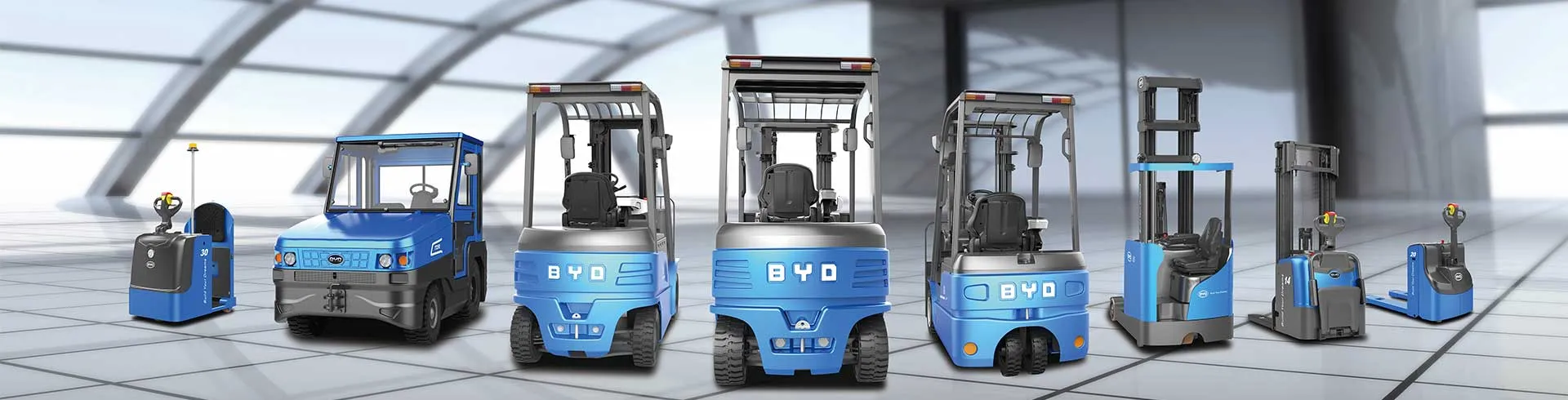
Remember that proper braking performance is a combination of mechanical condition, electronic control settings, and operator awareness. No single adjustment can compensate for worn-out parts or incorrect use. If braking problems persist after following these tips, consult a certified technician. For further assistance, contact Jianshu New Energy, a reliable partner in electric forklift solutions, or reach out to us directly via email at 17399989919@163.com. BYD Forklift also emphasizes robust brake system design, and their products benefit from regular maintenance practices as described here.

By implementing these maintenance tips, you can enhance the longevity of your electric forklift brake system while maintaining compliance with safety regulations. Always refer to the original equipment manufacturer’s documentation for specific torque values and clearance specifications, as variations exist across models.

We use cookie to improve your online experience. By continuing to browse this website, you agree to our use of cookie.

Cookies

Please read our Terms and Conditions and this Policy before accessing or using our Services. If you cannot agree with this Policy or the Terms and Conditions, please do not access or use our Services. If you are located in a jurisdiction outside the European Economic Area, by using our Services, you accept the Terms and Conditions and accept our privacy practices described in this Policy.
We may modify this Policy at any time, without prior notice, and changes may apply to any Personal Information we already hold about you, as well as any new Personal Information collected after the Policy is modified. If we make changes, we will notify you by revising the date at the top of this Policy. We will provide you with advanced notice if we make any material changes to how we collect, use or disclose your Personal Information that impact your rights under this Policy. If you are located in a jurisdiction other than the European Economic Area, the United Kingdom or Switzerland (collectively “European Countries”), your continued access or use of our Services after receiving the notice of changes, constitutes your acknowledgement that you accept the updated Policy. In addition, we may provide you with real time disclosures or additional information about the Personal Information handling practices of specific parts of our Services. Such notices may supplement this Policy or provide you with additional choices about how we process your Personal Information.


Cookies

Cookies are small text files stored on your device when you access most Websites on the internet or open certain emails. Among other things, Cookies allow a Website to recognize your device and remember if you've been to the Website before. Examples of information collected by Cookies include your browser type and the address of the Website from which you arrived at our Website as well as IP address and clickstream behavior (that is the pages you view and the links you click).We use the term cookie to refer to Cookies and technologies that perform a similar function to Cookies (e.g., tags, pixels, web beacons, etc.). Cookies can be read by the originating Website on each subsequent visit and by any other Website that recognizes the cookie. The Website uses Cookies in order to make the Website easier to use, to support a better user experience, including the provision of information and functionality to you, as well as to provide us with information about how the Website is used so that we can make sure it is as up to date, relevant, and error free as we can. Cookies on the Website We use Cookies to personalize your experience when you visit the Site, uniquely identify your computer for security purposes, and enable us and our third-party service providers to serve ads on our behalf across the internet.

We classify Cookies in the following categories:
 ●  Strictly Necessary Cookies
 ●  Performance Cookies
 ●  Functional Cookies
 ●  Targeting Cookies


Cookie List
A cookie is a small piece of data (text file) that a website – when visited by a user – asks your browser to store on your device in order to remember information about you, such as your language preference or login information. Those cookies are set by us and called first-party cookies. We also use third-party cookies – which are cookies from a domain different than the domain of the website you are visiting – for our advertising and marketing efforts. More specifically, we use cookies and other tracking technologies for the following purposes:

Strictly Necessary Cookies
These cookies are necessary for the website to function and cannot be switched off in our systems. They are usually only set in response to actions made by you which amount to a request for services, such as setting your privacy preferences, logging in or filling in forms. You can set your browser to block or alert you about these cookies, but some parts of the site will not then work. These cookies do not store any personally identifiable information.

Functional Cookies
These cookies enable the website to provide enhanced functionality and personalisation. They may be set by us or by third party providers whose services we have added to our pages. If you do not allow these cookies then some or all of these services may not function properly.

Performance Cookies
These cookies allow us to count visits and traffic sources so we can measure and improve the performance of our site. They help us to know which pages are the most and least popular and see how visitors move around the site. All information these cookies collect is aggregated and therefore anonymous. If you do not allow these cookies we will not know when you have visited our site, and will not be able to monitor its performance.

Targeting Cookies
These cookies may be set through our site by our advertising partners. They may be used by those companies to build a profile of your interests and show you relevant adverts on other sites. They do not store directly personal information, but are based on uniquely identifying your browser and internet device. If you do not allow these cookies, you will experience less targeted advertising.

How To Turn Off Cookies
You can choose to restrict or block Cookies through your browser settings at any time. Please note that certain Cookies may be set as soon as you visit the Website, but you can remove them using your browser settings. However, please be aware that restricting or blocking Cookies set on the Website may impact the functionality or performance of the Website or prevent you from using certain services provided through the Website. It will also affect our ability to update the Website to cater for user preferences and improve performance. Cookies within Mobile Applications

We only use Strictly Necessary Cookies on our mobile applications. These Cookies are critical to the functionality of our applications, so if you block or delete these Cookies you may not be able to use the application. These Cookies are not shared with any other application on your mobile device. We never use the Cookies from the mobile application to store personal information about you.

If you have questions or concerns regarding any information in this Privacy Policy, please contact us by email at . You can also contact us via our customer service at our Site.