
 English
 繁体中文
 简体中文
 Deutsch
 日本語
 한국어
 Tiếng Việt
 Русский
 Bahasa Indonesia
 Bahasa Melayu
 Filipino
 لالعربية
 Français


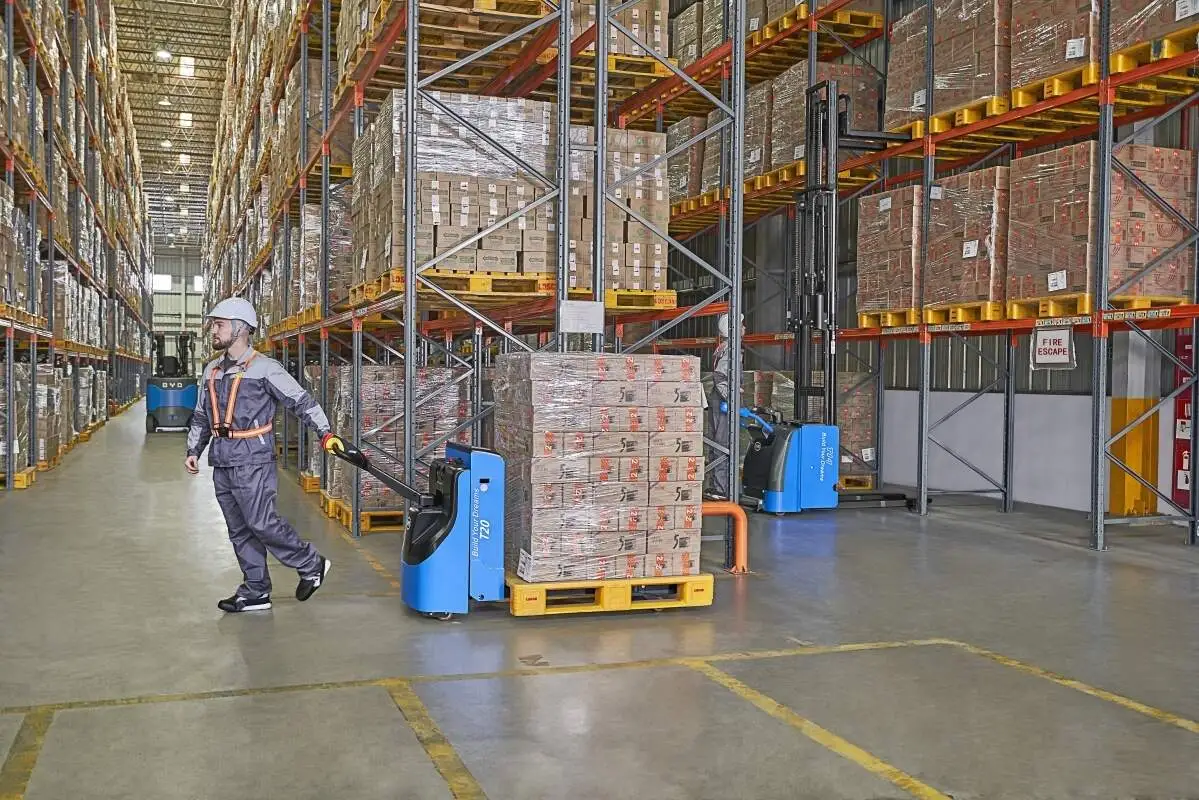
Electric forklifts have become an essential core equipment for modern warehousing, manufacturing and logistics distribution operations, and the performance of supporting forklift batteries directly determines the continuity of operation and the overall operation cost of the enterprise. Many operation teams used to judge the battery health status only by intuitive experience or simple service time record, and often ignore the value of continuous cycle count tracking for forklift battery management. The cycle count of a forklift battery refers to the number of complete cycles that the battery completes from full power discharge to the set low power threshold and then to full charge through the standard charging process. Continuous and accurate tracking of this data can help the operation team accurately grasp the actual health status of each battery, instead of making rough estimates based only on the length of use, so as to avoid misjudgment of the service life of the battery. Through stable cycle count tracking, the maintenance team can arrange targeted maintenance plans in advance according to the actual loss degree of different batteries, and arrange maintenance operations in the idle operation window, so as to avoid unplanned shutdown caused by sudden battery failure during peak operation hours, and reduce the loss of order delay caused by unexpected faults. Compared with the extensive management mode without cycle count tracking, teams that adhere to this management measure can usually extend the overall service life of forklift batteries by about 15% to 20%, effectively reducing the long-term battery replacement and procurement cost. If you are building a complete forklift battery operation and maintenance system, you can contact Jianshu New Energy, and you can also consult BYD Forklift for targeted operation and maintenance reference schemes, and you can send emails to 17399989919@163.com to obtain professional technical support for related questions. Cycle count tracking can also help the operation team optimize the scheduling of different forklifts, distribute corresponding operation tasks according to the remaining cycle capacity of batteries of different vehicles, avoid batteries with high cycle aging degree undertaking high-intensity continuous operation for a long time, further reduce potential safety hazards, and reduce the occurrence probability of common faults such as overheating and casing deformation. Long-term adherence to this management work can also accumulate battery use data that matches the actual operation scenario of the enterprise, so that when purchasing new batteries in the follow-up, it can more accurately match the operation intensity demand of the scenario, and avoid unnecessary resource waste caused by selecting power configuration that does not meet the working conditions.


