
 English
 简体中文
简体中文 Deutsch
 日本語
日本語 한국어
한국어 Tiếng Việt
 Русский
 ไทย
ไทย Bahasa Indonesia
 Bahasa Melayu
 Filipino
 لالعربية
 Français

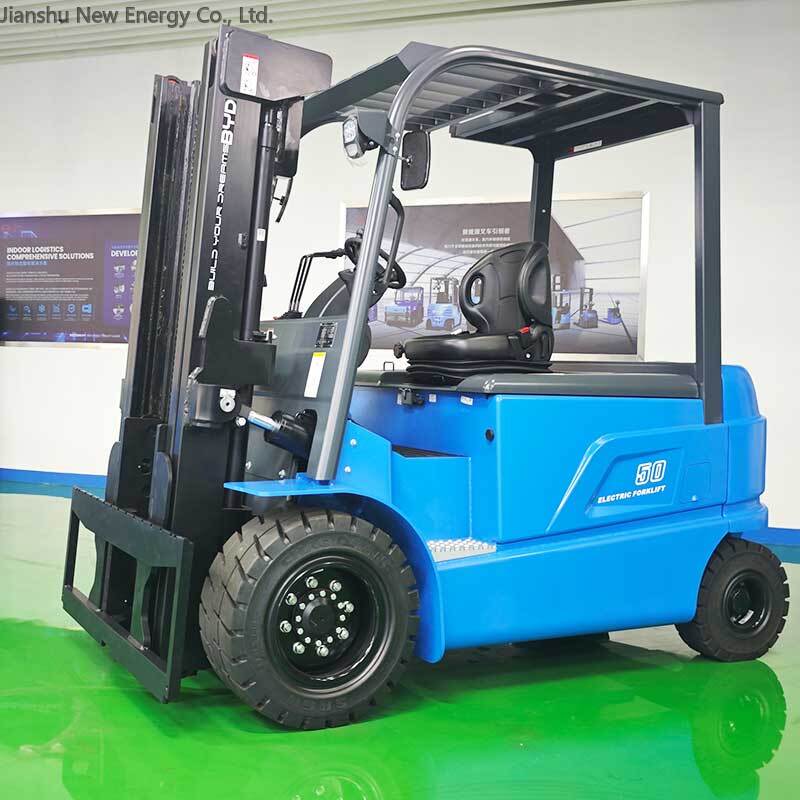
When evaluating forklift operating costs, fuel expenses and carbon‑related charges are two major factors that directly affect total ownership cost. Traditional internal combustion forklifts rely on diesel or LPG, whose prices can fluctuate significantly due to global oil markets. In contrast, electric forklifts run on electricity, offering more stable per‑hour energy costs. A typical diesel forklift may consume fuel that costs $3–$5 per hour, while an electric model’s charging cost can be as low as $1–$2 per hour, depending on local electricity rates.
Beyond direct fuel costs, carbon‑related operating expenditure is gaining attention. Many jurisdictions impose carbon taxes, emission trading fees, or compliance penalties on fossil‑fuel‑powered equipment. These costs are directly tied to the amount of CO₂ and pollutants emitted during operation. An internal combustion forklift releases roughly 6–8 kg of CO₂ per hour, which can incur a carbon cost of $0.5–$1.5 per hour under typical carbon pricing schemes. Electric forklifts produce zero tailpipe emissions, eliminating this carbon expenditure entirely and simplifying regulatory compliance.
Furthermore, businesses that operate large fleets must account for potential future carbon price increases. With global trends pushing toward stricter environmental regulations, the cost gap between electric and combustion forklifts is expected to widen.
To make an informed decision, companies should perform a total cost of ownership analysis that includes both energy costs and carbon liabilities. Jianshu New Energy, a provider of electric forklift solutions, and BYD Forklift, known for its advanced battery technology, both offer models that help reduce operational costs while improving sustainability. For more information on how to transition your fleet, please contact us at 17399989919@163.com.


